The More Important the Decision the Longer It Should Take.

In September last year, two Qantas Airbus aircraft with a combined total of more than 600 passengers almost collided.
The Air Transport Safety Bureau classified the incident as 'Serious'. It stated that it expected the investigation to be completed 'no later than September 2014.'
More than a year later and a month after the anticipated completion date the investigation remains Active.
The more important a decision, the longer it should take to make.
Interested third parties will be patient if the decision maker manages their expectations.
Underpromise and Overdeliver.
If the decision is likely to take a month, predict two and make it in one and a half.
Artificially compressing decision time adds drama and gravity and importance to the decision - and thus to the decision maker's prestige.
Widget focus - keeping the end result in mind - can help to settle the ego.
The ATSB can take time to learn from how several hundred lives were almost lost in circumstances that are repeated thousands of times daily in the skies.
There are few workplace decisions that can't allow the same.
The Divisive Decisive and The Indecision Villain.

'For the perfect accomplishment of any art, you must get this feeling of the eternal present into your bones — for it is the secret of proper timing. No rush. No dawdle. Just the sense of flowing with the course of events in the same way that you dance to music, neither trying to outpace it nor lagging behind. Hurrying and delaying are alike ways of trying to resist the present.'
- Alan Watts
We boo the Indecision Villain.
We cheer the Divisive Decisive.
Both share the awkward discomfort of their uninvited guest: New Information.
('Behind you! Behind you!)
The Divisive Decisive waves their Positional Power Wand over New Information and says the magic words:
'I think that...'
And magically pulls Decisions out of...their...hat.
The Indecision Villain just ignores New Information.
Boo!
The Good Decision Maker sits with New Information for a while.
Then - feeling the eternal in their bones - rises and takes New Information into the space created by the Leader.
Counts out the Organisation's Widget rhythm (Step 2, two three, Step 3, two three...)
And they dance.
Secured by the Secret Service.
On 19 September Omar Gonzales jumped the fence of the home of the President of the United States armed with a knife.
He sprinted across the White House lawn towards the front door.
The plainclothes surveillance team whose job it is to detect fence jumpers and protect the most powerful man in the world didn't stop him.
The Secret Service officer in the North Lawn guardhouse did not stop him.
The attack dog did not stop him.
The Secret Service guard at the front door did not stop him.
The SWAT team at the front door did not stop him.
The alarm box designed to alert the building to an intruder had been muted.
The intruder was finally tackled inside the East Room.
Seven successive failures in decision making.
16 breaches of White House security in the last five years. Six this year. 'Hundreds' have approached the perimeter and made verbal threats.
The fear of being wrong is understandably a major influence on our decision making.
As someone wrote - we tend to compare our bloopers with everyone else's highlight reel.
Yet if the United States Secret Service - with a budget of $1.8 billion and the job of protecting the most powerful man in the world - can fail in each of seven layers of defence - we can feel a little better about getting it wrong.
Course Orderly Creep.

Officers Training School Morning Parades with Inspections by the Flight Commander were at 0750.
The Warrant Officer Disciplinary 'suggested' we form up at the rear of the Parade Ground by 0740 so that he could do an inspection before we marched on for the Inspection.
Our Drill Sergeant assembled us by 0730 to inspect us for the WOD's inspection for the Inspection.
The rostered student Course Orderly wanted us to be in place for the Sergeant by 0720.
We agreed to march off from our block at 0710 for the ten minute march to the Parade Ground.
We formed up outside at 0700 for the Course Horse to inspect us before the Sergeant would.
The Course Horse would begin yelling 'One Course...On the ROAD!' at 0650.
An hour before Morning Parade.
We called it COC. Course Orderly Creep.
We were 24 trainee leaders who submissively aided the theft of our sleep, trustworthiness and sense of humour.
A ritual designed for a commander to personally assess the well being and morale and therefore combat fitness of his troops - depleted all three.
Every organisation has versions of COC.
Pre-meeting meetings.
Hierarchies of pre-decision decisions.
Layers of redundancy filtering or distorting information on its way to the decision maker and destroying trust along the way.
Mostly good, professional people efficiently and competently working hard to successfully perform self-contained often inherited duties - innocently oblivious to any drag on the Widget - yet each with a gnawing dissatisfaction.
Inevitably a cry arises from management - 'We need leadership!'
Code for: 'What's our Widget?'
If You Build It - Happiness Will Come (Maybe).

'Alastair Clarkson [Hawthorn Coach] ringing all his players asking them if they like him and if there's anything he can do to make them happier.'
- A wag's riff on the 'resignation' by the Bulldogs' coach after his captain asked to leave.
Alastair Clarkson coached Hawthorn to the 2014 AFL Premiership.
The wag implies that winning the Grand Final is the Widget. Do this as coach - and your players will be happy. Happiness may be a by-product of the Widget.
('We're a happy team at Hawthorn' begins the team song.)
The word 'Happy' comes from the middle English hap meaning 'chance' or 'good luck'. Hence the word 'happenstance'.
It's your Widget.
If you want to use Happiness - someone else's or your own - as your Widget, then good luck and God's speed.
Alastair Clarkson also coached Hawthorn to the 2013 AFL Premiership.
Three days later his champion Lance Franklin left to play for Sydney.
Be Open to Surprises.
The Chief Executive of the organisation that governed most of the civilised world for the last two thousand years has some claim to know about good decision making.
As the boss of the largest private employer in Australia with 180,000 employees, over $100 billion in assets and an annual income of over $15 billion, he's worth listening to - regardless of whether you are a customer.
Earlier this week he warned about the risk of creating 'masterpiece' systems hat were so perfect that they closed themselves off from the potential for 'surprise'.
He reminded us that we need to remember that we are 'on a journey....and when we set out on a journey, when we are on our path, we always encounter new things, things we did not know.'
He reminded us that the law - systems - are not ends in themselves - but the means to an end. If those systems do not bring is to our Widget - then they are 'dead'.
He said that we should ask ourselves: 'Am I attached to my things, my ideas, [are they] closed? Or am I open to...surprises? Am I at a standstill or am I on a journey?'
A good decision is one that advances us towards where we want to be.
Good decision making is a deliberate process of inquiry - a journey open to 'surprises' - that advances us towards where we want to be.
The challenge for organisations - whether the Roman Catholic Church or a factory - and those of us leading them - Pope Francis or a line manager - or the rest of us in the pews or in open plan cubicles - is to create and maintain a framework for decision making that does not tether us but frees us to be surprised.
That takes courage.
And leaders who are brave.
If You Name It - You Own It.

'If you name it you own it. And they don't want to own it.'
- Anonymous US official and the lack of a code name for operations against the Islamic State.
Few workers can name their Widget - the thing they're being paid to make.
Most managers find it difficult to state their subordinates' Widget - the thing that they supposedly need made to make their own Widget.
It's either because they don't know what their Widget is, or they have disowned it.
How extraordinary. What's everyone doing if not making their Widget?
They're talking about making - something.
Without Widget Clarity - it's meetings all the way down.
Go Widget or Go Home.

'I wish to God that you protected the White House like you are protecting your reputation here today. I wish you spent that time in that effort to protect the American President and his family...'
- Representative Stephen Lynch to Director of the Secret Service, Julia Pierson.
Widget focus helps us to apply our finite reserves of time and intellectual and emotional energy towards the job that we are paid to do and by which we will be measured and which will give us currency and calories - and more.
If we divert time and energy away from building our boss's Widget and towards defending our ego, we weaken our ability to produce the thing that will answer our critics.
Amidst the noise and distraction of information and our fight-or-flight responses, the Five Steps towards a good decision keep us focussed and on task.
Even when the Widget battle is lost, we should resist the urge to go down fighting for our ego.
Begin building our next Widget for our next boss by learning what went wrong with our construction of this one.
Because the boss is always right.
The Truth Is Worth a Pause.

'It was submitted by Essendon and Mr Hird that Ms Andruska was non-responsive, evasive and partisan. It was observed, as was the fact, that there were long pauses between the questioning of Ms Andruska and her responses.
'I do not consider these criticisms, to the extent they impact on her veracity, can be sustained. Ms Andruska was a truthful witness. Ms Andruska was careful in all her responses, and in my view wanted to consider properly each question, seeking to provide a truthful answer....The cross-examination traversed many areas of detail relating to various meetings and decisions made in the course of the investigation. I would have expected Ms Andruska to be careful in responding to the interrogation made of her on these matters, as indeed she was.'
- Justice John Middleton, Federal Court Judge
Step 1 - Step Back.
Don't mistake decisiveness for good decision making.
Successfully Failing Your Way.

'If you're going to fail - fail my way.'
- Ron Barassi, six time AFL Premiership player, four time Premiership coach.
A good decision is one that advances you towards where you want to be.
At home - choose where you want to be and how you get there and by when.
At work - your boss pays you to advance her towards where she wants to be.
Where she wants to be.
It's her Widget she's paying you to make.
Her Widget.
You don't get to tell her what her Widget is. That's her boss's job.
You don't get to tell her she's making her Widget wrongly. Again - her boss.
Your boss is paying you money to do whatever she has employed you to do to contribute towards making her Widget to her boss's satisfaction.
You're paid to tell her anything about your widget that is relevant to her Widget.
Once you've done that and you're sure she's understood you - then shut up.
That's why the boss is always right. Always.
Yours is probably one of many widgets that the boss is coordinating to make her Widget. She needs you to make it to her specs so that the other widgets will fit.
She's entitled to ignore your opinion on your widget because it's ultimately her Widget.
Your boss can lead you to failure if she wishes.
It's her Widget.
Let her fail her way.
Doing It Without Emotion.

'When I first started I'd have the laptop open and into reviewing the game as soon as I possibly could. So an hour after the game and long into the night at times.
Most games these days I don't do anything the night afterwards.
Just to have a bit of clear space to make sure that I'm doing it without emotion.'
- Brad Scott, Head Coach of North Melbourne Football Club
The First Step of the Five Steps to a Good Decision is to Step Back.
Three Points of Contact.

'Speak as they please, what does the mountain care?
Ah, but a man's reach should exceed his grasp,
Or what's a heaven for?'
Course 1 of 90 Officer Training School learned Rock Climbing at Mount Arapiles during Exercise Discovery. Cute.
Four holds on the rock face - both hands and both feet - in the known. Secure. For as long as the muscles can hold your weight.
Keep at least three points of contact on the rock face at all times. Reach for the next hold with one hand or foot at a time.
That was me. Halfway up a cliff face.
Abandon one of those holds and stretch out an arm or a leg to inquire of the rock face above. Feel. Grasp. Test. Commit. Move.
That wasn't me.
I wasn't inquiring. I only had the strength to hold on. My legs were trembling with the strain - the 'sewing machine leg' we'd been warned about by our instructors.
To move I had to reach above and feel for a hand hold. I didn't know if I'd find one. I did know that the effort would suck my energy and probably for no gain. So I held on.
An instructor abseiled down beside me and I hated his encouragement that there were holds above me if I reached up because he was sitting in a harness of six month old blue sterling fusion nano rope and I was clinging to million year old quartzite.
Purely to hasten the standard tedious 'What did you learn from that?' debrief that we had at the top half an hour later I put up my hand and said 'Sir, I will reflect on today's exercise whenever I feel like I'm stuck.'
In the nearly 25 years since that answer it has never served as a metaphor for anything.
Until today.
A good decision is one that advances us towards where we want to be.
Three fixed holds that secure the inquiring reach for the next unknown hand hold:
- My Widget
- The decision making process
- My response to what happens next
Each anchors a reach into the unknown - exceeding our grasp.
(Or what's a Widget for?)
A Good Decision is the Least Harmful if Wrong.
A heuristic shouldn't be the "least wrong" among all possible rules; it should be the least harmful if wrong.
- Nassim N. Taleb.
The Five Steps to a Good Decision won't give the right answer.
They will lead to a good decision.
The least harmful if wrong.
Step 1 (Step Back): Cares for the Decision Maker.
Step 2 (Name the Issue): Cares for Resources.
Step 3 (Assess the Information): Cares for the Truth.
Step 4 (Check for Bias): Cares for the Widget.
Step 5 (Give a Hearing): Cares for Others.
The Widget is the North Pole of Decision Making.
A good decision is one that advances us towards where we want to be.
Good decision making is a deliberate process of inquiry that advances us towards where we want to be.
Where do we want to be?
Wherever that is - that's Our Widget.
The Widget is the Magnetic North Pole of Decision Making.
It defines where we are, where we've been, and where we want to be.
Our Widget is one of three things we control in a decision.
There have been trillions of trillions of journeys that have used Magnetic North to navigate.
A couple of hundred ever reached it.
Our Widget may be over the horizon and yet it guided us today.
The Widget is a fixed point against which we can measure our progress.
In our work.
In our relationships.
In our life.
Which is why it's all about the Widget.
Amidst the Chaos We Control Three Things.
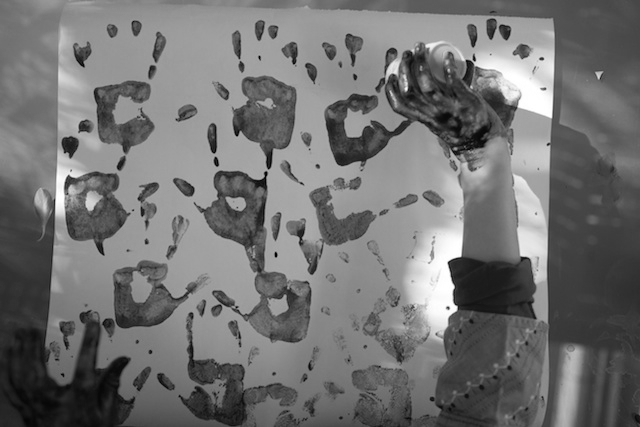
Life is random.
Luck.
Chance.
Grace.
Fate.
Misfortune.
We decide. Then Life happens.
So what's the point of good decision making?
We control three things:
The Widget Goes to War.
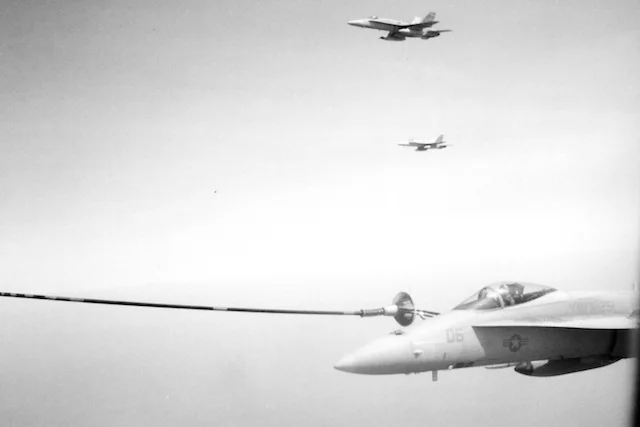
Widget Clarity is essential in good decision making.
The military knows this.
'Selection and Maintenance of the Aim' is one of the Australian Defence Force's 10 Principles of War.
The United States' military's equivalent is 'Objective'.
The Widget has utility on many battlefields.
The Chairman of the United States Joint Chiefs of Staff was asked by Senator John McCain whether he thought that the Syrians the US was training and arming to fight the Islamic State of Iraq and the Levant (ISIL) weren't going to turn those arms and training against the Syrian government.
Senator McCain said: 'You don't think that the Free Syrian Army is going to fight against Bashar Assad who has been decimating them? You think that these people you're training will only go back to fight against ISIL? Do you really believe that, General?'
General Dempsey's answer showed the power and clarity of Widget Thinking:
'What I believe, Senator, is that as we train them and develop a military chain of command linked to a political structure that we can establish objectives that defer that challenge to the future. We do not have to deal with it now.'
Senator McCain's Widget: Undermining President Obama.
The General's Widget: The defeat of ISIL.
General Dempsey's Widget Clarity continued to serve him well as he was questioned at the Senate hearing.
Senator McCain sought to use the General's previous support of US intervention in the Syrian civil war to undermine his (and therefore President Obama's) commitment to the 'ISIL first' strategy.
Senator McCain: 'General Dempsey, was the President right in 2012 when he overruled most of his national security team and refused to train and equip the moderate opposition fighting in Syria at that time?'
General Dempsey: 'Senator you know that I recommended that we train them. And you know that for policy reasons the decision was taken in another direction.'
General Dempsey demonstrated Widget Thinking.
He differentiated between his Personal Widget and his Professional Widget.
He showed loyalty to his boss - the Commander in Chief and President.
He showed integrity.
Widget Clarity.
The Only Way to Learn.

Sergeant Mortellaro - My Drill Sergeant during Officers Training School
“I have already chose my officer.”
And what was he?
Forsooth, a great arithmetician...
That never set a squadron in the field,
Nor the division of a battle knows...
- 'Othello', William Shakespeare
'The problem is that when we're new to something or when we're approaching intermediate skill at something, it gets dangerous. Because you need to have an awareness about how much more you could learn. There's the cataract of not being great at something that makes it difficult to know what you need to learn to get better. The only way to learn that is from other people. It's very difficult on your own.'
- Merlin Mann
When you become the boss for the first time, you're dangerous.
Lots of positional power and no experience of how to use it.
You've made lots of widgets so well that you've been put in charge of other people making widgets. They're completely different skills with only the widget in common. You're an arithmetician - full of the theory. Or maybe not even that.
Sure - you've had lots of leadership role models:
Parents. Older siblings. School teachers. The drill sergeants in the movies.
That's not the worst of it. As Merlin Mann says, you may not know that you don't know. Or if you do, you can't show it. Your people will eat you alive. Your boss wants you to deliver from day one. You've got to be strong. Decisive even. That's what they do in the movies.
So you set about being Mum, Dad, older sister, home room teacher and Gunnery Sergeant Carter. You stop being yourself.
Your people will teach you what it takes to be a good boss. Ask them. Engage them in good decision making.
Yes it's risky. They may take advantage of you.
Which is why they won't.
The First Thing You Need to Do.

'To ask a manager about specific tasks which she/he assigns to a subordinate comes as an unfamiliar experience for most - and the managers find replying equally strange and awkward until they get used to it.'
- Elliott Jacques, Requisite Organisation
The first thing:
Find out your boss's Widget.
Ask your boss: 'What do you have to do, and by when?' (That's her Widget.)
Then ask: 'What are you relying on me to do and by when for you to do it?' (That's your Widget.)
(If her answer is the same as what's in your employment agreement or duty statement, that's a bonus.)
Then ask: 'What does your boss want you to do and by when?' (That's what your boss really cares about and therefore you should care about it too.)
Go away and think about your boss's answers. (If Elliott Jacques is right, you may need to give your boss some time to answer.)
If there's anything stopping you from giving your boss what she wants - tell her.
Then make your Widget.
Do your job.
It's that simple.
You've also made your first good decision.
You've undertaken a deliberate process of inquiry that has advanced you towards where you want to be.
You don't know where you want to be?...
Perhaps that was the First Thing you should have decided? - where do you want to be?
(It was still a good decision - it prompted you towards deciding where you want to be.)
What if you do all of that, make your Widget, and your boss isn't happy? Then you've misunderstood your boss. Your decision has helped you to readjust your understanding about what the boss wants. The sooner you start making Widget decisions, the sooner you'll learn whether you're making what your boss wants.
The boss is always right.
If you're someone's boss, invite them to have the same 'What do you need to do by when' conversation with you. Including inviting them to define for themselves where they want to be.
If you, your boss, or your workers have not had any of these conversations - then there's the source of every problem.
This conversation rarely happens.
It's all assumed.
Which is a lot of the reason why 81% of Australian workers are not engaged.
It's not too late.
Trust: The Best Way to Manage.

The High Court ruled last week that there is no implied term of mutual trust and confidence in Australian employment contracts.
What is trust?
Trust is the basic social glue.
It influences good decision making.
Yet just like good decision making, no-one teaches the theory and practice of Trust.
It's seen as an emotional, moral quality.
Is 'Trust' in MBA courses? Is it in Staff Induction days? Are there Trust policies?
Time to remedy our lack of knowledge about Trust.
Reinhard K. Sprenger wrote 'Trust: The Best Way to Manage.' Here are the highlights to help begin incorporating an understanding of the influence Trust has in good decision making.
It is no longer possible for trust to develop out of familiarity.
Trust increases the scope for nonconformity (the lateral thinking so highly regarded everywhere), individuality and originality. People can be who they are. Without trust, motivation doesn't last.
Many studies have attempted to establish a correlation between internal company factors and corporate results. But only one variable has been substantiated as having a significant correlation: the nature of staff members' relationships with immediate managers. If the relationship is good, productivity increases; if it is bad, it declines. Within a relationship that someone experiences as positive, the most important feature is trust.
it has often been said that trust is the basis for management. Allowing oneself to be managed means trusting someone.
Modern trust is based on people's having chosen to work together and trust each other. This trust is reflective and calculating. This trust is neither blind nor naïve. This trust is a decision.
'The best managers trust their people from the first day. On the basis of an inner conviction they trust them to do the best and to deliver good work. Only the cynical managers think staff have to trust first.'
- Carolyn Dyer, Gallup Senior Analyst
Trust is a potential solution for problems involving risk. Accordingly, trust presupposes a risk situation. Risk comes first. Then comes trust (or mistrust).
I am prepared to relinquish control of another person because I expect them to be competent, and to act with integrity and goodwill.
It is only sensible that trust is always limited.
The reason that we often undervalue trust is that we aren't aware of it until it has been broken. Then we are usually astonished, sometimes even shocked.
Either/or: this is one of the greatest obstacles on the path to recognising trust as the elixir of life in the business world. What's missing is a sensible intermediate position. But if I want to talk about trust, build trust and make a decision about trust, I have to be aware of it. Only then does it become an option I can choose.
Only conscious trust is real trust: the conviction that the other person won't betray me, although I know they could. I shall leave it to you to judge whether "hope" or" confidence" might be better terms for this. What's important to me is that the diminution of trust is a contribution for its very existence.
Everything we value as trust can be obtained only within a framework of knowledge and in conditions of relative security. Because knowledge is limited and total security isn't possible, we must complement both with trust. Knowledge and security don't necessarily amount to mistrust; they are the basis to which trust can relate. This means that knowledge is the primary idea that must be in place before we can speak about trust.
What people tend to forget is that learning can't take place if the outcome isn't monitored.
Control doesn't necessarily undermine trust. Control can actually safeguard trust. The higher the degree of trust, the more important the safeguarding function of control. It then acquires an informative, supporting and enhancing character. But if on the other hand trust is displaced beyond a certain threshold, the experience becomes one of mistrust. The higher the degree of mistrust, the more limiting control becomes, thereby diminishing trust still further.
The optimum ratio between trust and control is not constant, but will fluctuate according to the situation and the occasion.
Contracts can provide a platform on which a trusting collaboration can be built. Take an employment contract. If it regulates the essentials and confines itself to the minimum, it will never see the light of day again once an employee has started work. But without it, many would never start at all. It represents a minimum guarantee for mutually acceptable behaviour.
Trust isn't possible without control, nor control without trust. It is the proportion that is important.
In its extreme form, trust paradoxically destroys the basis for its own future. A certain measure of selective mistrust is required in order to give worth to trust and to ensure its continued existence.
Trust is like an advance: it can be cashed in later. Trust is always on trial.
Trust still needs to be justified by results now and again if it is to be continually renewed. That's what sets it apart from the rule of obedience or loyalty to the alliance that still dominates many businesses today. If your interests are upheld by the other person's actions in the expected matter your trust remains intact.
Trust brings risk with it, but so does mistrust. There is no business without risk.
When we are in a position to evaluate the relative trustworthiness of someone, we are dealing with a proportion. And it is in this proportion that we deed to make a decision on.
Trust must remain constructive; it mustn't make you blind and mustn't ever be absolute. The same goes for mistrust.
Modern trust therefore involves a decision in favour of a combination of trust and mistrust, of control and the relinquishing of control.
Trust is often weighty, moralistic, admonishing. The question 'Don't you trust me?' makes you eager to say you do. Trust is often viewed as an unalloyed substance like honey, spreading well-being when ever it flows. But this picture is skewed. Trust isn't intrinsically good.
In some cases, defensive managers misuse trust as a label. They don't pay attention, don't act, don't manage, and excuse their passivity by claiming trust in their employees. But trust can never mean retreat and passivity.
Trust is neither good nor bad. There is no need to evaluate it at all. It can be explained more or less fully as a product of a rational collaboration with no moral component.
Someone who says 'trust me' is effectively declaring trust to be a debt the other person owes them. The subtext is: 'if you don't trust me, there's something wrong with you'. In fact when people are told 'trust me' they often feel ashamed or guilty if they don't manage to trust.
A manager needs to remain aware of his role in the company and position in the hierarchy at all times – and that rules out genuineness. This applies especially critical situations that staff experience as threatening.
I want to be quite clear about the fact that my policy is to use trust to influence behaviour. This would only represent a moral problem if I were to conceal a manipulative intention.
A trusting relationship is characterised by the expectation that the dependency involved in the relationship will not be exploited by one of the parties.
It can be highly advantageous for people to confirm trust if they value the space to be themselves, manage themselves and be respected. And the benefits are great too if they coincide with the maximum benefit for the manager: if both are pursuing interests in the same direction.
If you nevertheless trust: you will consciously choose uncertainty, loss of control and the possibility of disappointment. You give the employee a task without knowing whether he will prove worthy of your trust; you don't know whether he will use his freedom of action to your detriment. So placing trust initially involves risk for you as a manager. This risky advance investment can't be justified in an absolute sense, but it is extremely reasonable, as we shall see.
Vulnerability starts trust.
Active trust is accepted vulnerability.
Trust brings commitment. It creates obligation. It binds. It unleashes a deep current from which we can barely escape. And the greater the risky advance investment, the greater the binding effect.
The important thing is that giving trust is a gift that creates obligations is precisely because it is difficult or impossible to demand.
It has now become clear that two things that appeared mutually exclusive actually belong together: trust and control. Trust controls the behaviour of another person. It is wrong to play trust and control off against each other. The opposite applies: trust is control.
If you as a manager place your fate in the hands of your staff, if you relinquish your power and ability to act arbitrarily, if you allow staff to take responsibility for things that will affect your success, then the binding effect of trust can develop. Are your staff aware that you will be damaged if they don't do the job? It isn't enough to say 'I need your contribution'; your staff must be aware that you have a problem if they don't do their job. If a member of staff is justified in feeling that their contribution hardly counts, has little effect and isn't indispensable, no trust can develop.
Trust people to have their own quality standards for themselves and their work. Get rid of time monitoring systems.
Take customer orientation seriously. Support unorthodox decisions made by the staff.
Check first, then trust.
Put yourself to the test with your staff: give them the opportunity to vote you out. This is the highest level of vulnerability possible at work. It is the ultimate level of trust. Trust becomes possible when you make yourself dependent on the agreement and performance of your staff.
You get the trust mechanism started when you yourself give trust first by allowing yourself to be vulnerable. This is the most important condition. You are vulnerable when an abuse of trust by the other person would be hugely detrimental to you.
When human beings are treated as responsible people, they behave as such. We know from research that we are strongly influenced by other people's opinion of us. The other person is, or can become, a person of integrity if we give them the opportunity to confirm trust.
If you distrust, you never have the chance to encounter a trustworthy person.
The message 'I trust you' is more effective in bringing about a desired outcome than 'trust me' is. It invests something before it expects anything; it gives first and then receives.
Trust is neither a prerequisite nor a result. It is both. It oscillates between prerequisite and confirmation. Trust runs in a circular pattern. So does mistrust.
Is sad mentality of caution: it is in hierarchies where the emphasis has shifted dramatically from responsibility for tasks to responsibility in terms of accountability that there is constant dissatisfaction with conditions in the company. Everywhere, the question 'Where were you when that happened?' creates the mixture of uncertainty and fear that turns trust into a constraint. Trust is sacrificed when people decide to take a safety measure to deal with a risk that may actually have been small.
When you withdraw trust from an employee, they don't have to balance the relationship account by contributing something in return. They no longer experience an inner pressure pushing them to restore the balance. They no longer have a bad conscience about cheating on you because you don't consider them trustworthy anyway.
Trust isn't a moral action. It doesn't necessarily consist in believing in the other person's good intentions. It can be assigned to the rational sphere. It consists of a rational policy of maximising benefit, and intelligence that calculates advantage. You can decide to trust.
Power doesn't come from above. It exists in the relationship of one individual to another in so far as the individual has freedom to act.
You are not really a member of the group until you have earned the trust of others. And trust develops when you place the objectives of the group above your own ego. The group always comes first.
What brings us together, what induces us to act considerately, is common problems.
Problems that allow us to collaborate must fulfill at least two conditions. First, they must be important problems that affect our business life directly or indirectly. Second, they must be self-evident problems; it's no good if people aren't aware of them unless they are given a briefing, or unless they have a university education.
Trust is rational against a background of common problems
Collective identity arises when management succeeds in presenting problems as collective problems.
Only those two trust themselves can trust others. People can be capable of trust only if they have relatively secure, prolonged contact with their own sense of reliability.
Being faithful to agreements is the core of trust.
What principle do managers follow? If they seek success it will be trust. If they are out to avoid failure, it will be mistrust.
Trust is inconceivable without taking a risk; it therefore requires courage. It is a bet on the future; it is located between knowing and not knowing. Under some circumstances, it entails taking risks that endanger life. But it also involves important chances.
A breach of trust occurs only if the other person fails to adhere to agreements in which expectations are balanced.
Trust is the rule, mistrust as the exception, not vice versa.
The gain from confirmed trust remains invisible and isn't even detected, whereas the loss from abused trust is visible and experienced directly.
The rules of second chance ethics are:
1. Always offer to cooperate first.
2. If your offer is returned, be prepared to trust in the long term; if not then punish immediately and mercilessly.
3. Offer the trust again after a certain period
Under no circumstances should you turn a blind eye to a breach of trust. Don't allow someone to break your implicit trust. If you don't act, you are an accomplice, as good as saying 'it's it okay to abuse trust'.
Tit for tat also applies in the event of you doing something wrong. Don't cover it up, but face up to it fairly and squarely. 'My behaviour wasn't acceptable and that matters to me. Will you give me another chance?' Scarcely anyone would deny you.
Trust isn't a matter of models and Mission statements. The acid test is the concrete behaviour of the person fixing the values in cases of conflict.
If you work with someone, you should trust them. If you don't trust them, you should do better not to work with them.
The decision to trust is then the result of rational calculation mixed with emotional processes.
Be Decisive And Wait.
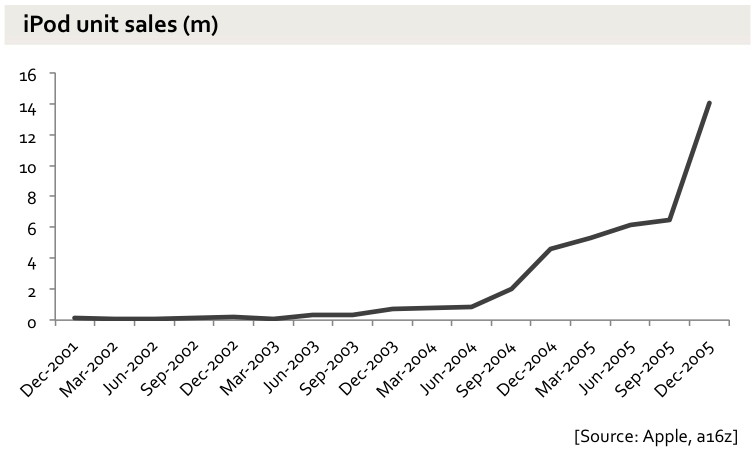
Those iPod quarterly sales meetings in March 2002, June 2002, September 2002, December 2002, March 2003 and June 2003 must have been tough.
The owners of two billion iPods should be grateful that Steve Jobs didn't respond to these numbers with the 'decisiveness' that many managers mistake for good decision making.
The first job of a Leader is to create the space.
And hold it.
Hold it.
Hold.