Seeing.

'You must love those you lead before you can be an effective leader, You can certainly command without that sense of commitment, but you cannot lead without it. And without leadership, command is a hollow experience, a vacuum often filled with mistrust and arrogance.'
General Eric Shinseki - Ex-US Army Chief of Staff
The Air Commodore saw the Flight Lieutenant waiting at the Orderly Room counter.
'How are you finding the job so far, Bernard?' He remembered my name. He was the Air Officer Commanding Training Command with hundreds on his immediate staff and thousands more at the units under his Command scattered around Australia and overseas. He remembered me after being introduced a month earlier when I began my first real Air Force posting.
'Busy?' he asked. I gave the only answer that I could to my boss's, boss's boss. 'Well, you need to find a couple of days to spare,' he said. 'How would you like to come with me on a Staff Visit to RAAF Base Wagga?'
The next day I accompanied the Air Commodore and his senior staff to all his meetings with the various commanding officers of units at RAAF Wagga. 'I think it's important that all junior officers get to see what we do first hand,' he told me in his car on the way there. 'You need to get out of Headquarters as much as you can to see what our people do.'
I watched how a One Star commander listened, spoke, deliberated, questioned, joked, sat, responded, decided, commanded. No other boss ever gave me an opportunity like that, let alone a boss's, boss's boss. The second most senior commander in the Air Force.
No other boss saw me.
On the drive back to Melbourne he asked me 'What did you think?'
A good boss sees.
She sees you and stops to help you [to become who you are].
She sees because she is looking.
She is looking because she is confident that she doesn't know and that you may.
She hands you her map and says 'Take us there'.
Error.

But what if I'm wrong?
'Anything worth doing is worth failing at'.
- Fr Greg Boyle
‘Experts step outside their comfort zone and study themselves failing.’
- Josh Foer
‘An expert is a man who has made all the mistakes which can be made in a very narrow field. We learn how to get it right by getting it wrong again and again.
- Niels Bohr
‘The only mistake is when I'm not able to perceive what it is that someone else did.’
Stephan Harris Jazz Musician
‘What amazes me is that people rarely see today's problems as new challenges born out of yesterday's perfect solutions.’
- Anon
‘The freedom to fail is more important than freedom to succeed. A big creative adventure vs. a small, safe future.’
- Anon
‘Any given decision you make you’ll wind up with a 30 to 40 percent chance that it isn’t going to work. You have to own that and feel comfortable with the way you made the decision. You can’t be paralyzed by the fact that it might not work out.’
- President Obama
'It is only at the moment of humans' realistic admission to selves of having made a mistake that they are the closest to that mysterious integrity governing the universe.'
- R. Buckminster Fuller

Simplicity.

'Everything in war is simple, but the simplest thing is difficult.'
- Carl von Clausewitz
The more business education about decision making, the worse the decisions.
The more complex the decision-making environment, the more need for simplicity of decision making process and tools.
These were the conclusions from a PhD thesis.
The participants in the experiments who were given a simple objective - make a profit - made the best decisions. Those who made the worst decisions were the ones who were distracted by information about their competition and the need to maintain market share.
The participants who were given simple tools to work through their decisions had the flexibility to adapt to dynamic circumstances.
Widget Thinking and the Five Steps provide both the simplicity and the 'sense making' that serve good decision making.
Good decision makers check their progress against their Widget as their True North.
In 1983 John Bertrand and the crew of Australia II were down 1-3 in the seven race Americas Cup final. This was his response at a press conference:
'Basically, nothing has changed. After Sunday afternoon, we had to win three boat races. Today we still have to win three boat races.'
He held his nerve and Australia won the next three races and the Cup.
Leaders don't measure their progress by where they are with respect to anyone else. They make good decisions and the rest takes care of itself.
Underpins.

The Report into the Inquiry into the 2013 WA Senate Election provides further rich examples of Good Decision Making - particularly Widget Thinking.
The Executive Summary details the many complex challenges confronting the Australian Electoral Commission in conducting an election. It concludes with this statement (italics added):
[T]his Inquiry noted a range of issues involving culture, planning, systems and practices that contributed to the loss of the ballots. The implementation of the various recommendations, findings and observations throughout this Report could assist the AEC in its future operations. The Inquiry believes that these could be achieved by pursuing a future state where the sanctity of ballots underpins all aspects of the AEC’s operations, from planning to training, to materials management and all other aspects covered in this Report.
How does the AEC/Organisation X resolve the competing demands on it leading up to and during an election/doing business? How does it ensure that there is clarity amidst the chaos/organisational life?
It asks itself: 'What decision will ensure the sanctity of ballots/our Widget?'
It resolves all issues according to this outcome.
Conflict.

There are two types of workplace conflict:
- You Conflict: I don't like you.
- Widget Conflict: I don't like your Widget.
If only workplace disputes were all Widget Conflict.
Creative.
Passionate.
Focussed on better Widgets.
Instead – and despite how we usually argue our position - most workplace conflict is us feeling frustrated that our boss isn’t helping us to produce our Weekend Widget.
If it really was about our Weekday Widget…then who cares more about that our boss?
Never care more about something than the boss does.
Productivity.

Whenever you talk in the abstract or the generic to a large group of people, every single person thinks that you're talking to them. Except for you, because you're special and smart.
- Merlin Mann
I designed, organised, advertised and prepared for five presentations on Good Decision Making open to the public.
An hour. Free.
No one registered for the first one.
Two people registered for the second. Neither turned up.
We cancelled the rest.
Lots of possible reasons why. All my fault.
Meanwhile...
A study has found that bosses are losing an average of three months per year of productivity from each worker.
Those with the most unused 'discretionary effort' were knowledge workers.
One of the conclusions was lack of clarity about outcomes. Widgets.
Australians spend more hours at work than those in most other countries and yet according to another study, we rank second last on productivity growth, just ahead of Botswana.
Perhaps everyone who read about my Workshop was part of the 7.5% who considered themselves productive.
None of this applies to you and me though.
Evidence.

The CO of the Squadron was waiting for his two F111s when they taxied in to their hangar bays. Two days later he was waiting for me.
'The future of military aviation - indeed aviation in general in Australia is at a crossroads,' he began. 'The Minister wants us to deal with this incident in a way that ensures continuing confidence in our responsible use of airspace to conduct our training.'
My legal boss had put it more bluntly when he'd tasked me as the Prosecuting Officer. 'If you don't get convictions, don't bother coming back.'
The two pilots had each flown a low level 'spacer pass' by the control tower at the bombing range 30 seconds apart. Their speed was just below the sound barrier, causing a sonic 'disturbance' that blasted the tower into $100,000 worth of damage. The range controller was showered in glass but otherwise unhurt and with a great story to tell.
I arrived at the Base on the Friday. The trial was to begin on Monday. Everyone at the Squadron was as respectful as my rank required in assisting me to gather evidence. But no-one wanted to help me to convict two of their own pilots.
'There was an airman who filmed it,' the CO had told me. I found him and asked if I could have a copy of the video. 'I gave it to the Squadron Safety Officer,' he told me. The Squadron Safety Officer shrugged. 'I deleted it,' he said. It wasn't the smoking gun, but it would have helped.
Three years later and I'm visiting the Directorate of Flying Safety in Canberra to give some legal advice. I'm chatting with the two Squadron Leaders about the F111 trial and ask their opinion about some of the questionable technical evidence given by the pilots.
'Would you like to see the video?' one of them asks. My jaw falls open.
My role as Prosecuting Officer in a Defence Force Disciplinary Act trial was to use an adversarial process to present admissible evidence that proved beyond reasonable doubt that two pilots had broken the law and should be punished to deter both them and others from doing the same. In SPEAR terms I was helping to Patrol the Space.
The role of the Directorate of Flying Safety is to use an inquisitorial approach to gather information about aircraft incidents to learn from them and pass on those lessons to all pilots to keep them safe. It was helping to Create the Space.
Same information - different Widgets.
Mother.

Liz taught me.
'She's chosen to work instead of caring for her son. She'd be determined that every minute away from him was worth what she's sacrificed.'
A humbling insight into the working Mother.
She has an impressive CV even before she closes her front door or the gate from the day care centre. Endorsed for the following Skills & Expertise:
Time management, team leadership, risk management, instructional technique, project management, conflict management, human resource management, food management, multi-tasking, servant leadership, first aid, change management, team building.
That's what 'committed to' looks like.
The working Mother is primed to be Engaged.
Foot.

'Tis all one as if they should make the standard for the measure we call a foot, a Chancellor’s foot; what an uncertain measure would this be? One Chancellor has a long foot, another a short foot, a third an indifferent foot: ‘tis the same thing in a Chancellor’s conscience.’
Many knowledge workers' decisions are adrift from their boss's widget.
It may have happened when their bosses changed. Or when there was a restructure. Or there may have never been a connection in the first place. They are products of poor management. Which - ironically - encourages their sense of expertise because they are usually an island of decisiveness amidst timidity.
They are almost always good people who are dedicated and work hard and long hours. They are often called 'indispensable'.
They make decisions that they feel are morally right. This adds to their defensiveness and disproportionate reaction if challenged. Much like Selden's Chancellor's foot, their decisions are an extension of them, not transferrable and attached with an equal degree of organic stubbornness.
They are 'experts' whose advice is sought by others, thus further affirming their sense of expertise. They have become so simply by having exclusive access to information and authority and not because of any objective qualification or because the pillars of their decisions have held up a bridge. They're knowledge workers after all.
They spend much time at meetings, conferences and other forums where experts gather and talk.
At staff gatherings, they're nursing the cupcake in the corner surveying the room with the weary look of the veteran, regularly glancing at their watch to ensure that they are back at their desk to answer the important phone calls and emails and not let anyone down.
They mark their own homework. Their decisions are rarely tested.
They design, manufacture and quality control their own widget.
Their only accountability?
Complaints.
Scared.

'Make the time to be scared of more interesting things.'
- Merlin Mann
Watching TV at 8.37pm on a Wednesday when my phone announced an email and I nearly vomited.
At my desk at 2.50pm when I'm summonsed by the boss and I pocket my shaking hands.
Exiting the ceiling loft at 11.15 on a Saturday morning watching work scenes in my head instead of the ladder and stepping into space and falling five metres onto a plastic bin and then concrete.
I lay on my side for ten minutes wiggling my toes and visualising my spine and ribs and pulling plastic shards from my clothes and feeling reincarnated.
Work had nearly killed me.
I thought of the Merlin Mann quote.
The earth had slammed me into its bosom demanding I make time to think about my fear dividend.
Slumped in a car outside a chemist with a searing headache after a second day of prosecuting two military pilots. Stressed. Out of my depth. Thriving.
Sitting at a boardroom table next to the Chief Operating Officer facing off ten government and commercial lawyers opposite and the contract that would make or break our start-up company in stalemate. Stomach churning. Overwhelmed. Thrilling.
Emails about inaccurate staff leave accounting making me nauseous? Ridiculous.
Calls about not filling out an HR form correctly constricting my breathing? Embarrassing.
Peter Block says 'The price of freedom is anxiety.' Any decision worthwhile will make us scared. The key is to Step Back and confirm that our Widget is worth it.
I.

'There is a lot of learning between 'It fell' and 'I dropped it'.
- Anonymous
'You got a sec?,' the strike pilot asked me. His cheeks still had the outline of his oxygen mask.
I followed him to another room and he pushed a video casette into the VCR.
'This is vision from the package that I just led.'
The black and white infra red images filmed from an F111C aircraft earlier that night three nautical miles away at 600 knots began playing. He was about to narrate when he paused, smiled, leaned back in his chair and gently closed the door from where three pilots from one of our allies were looking in.
'See the cross-hairs?' he resumed. 'You'll see me move them over the corner of this intersection.' He jabbed at the screen where the white cross was settling on the outline of the top of a building. 'This was our target. The telephone exchange in the centre of the city. Top left hand corner. Remember it?'
I nodded. I had reviewed and approved all the strike package targets for the Commander earlier in the day.
'See those numbers here?' He pointed at one of several sets of readouts along the edge of the image. 'They are simulating my laser guided bomb coming in. Three, two, one. Perfect. Bang on. Target destroyed. Well, simulated. Now watch.'
The cross hairs remained in place for a few seconds. Then glided to the ghostly outline of the building on the bottom right of the intersection. Then back up. Pause. Then diagonally down. The image flickered to black.
'Wrong building,' he said, punching the tape out of the recorder. 'I bombed the wrong corner of the intersection. I need you to tell me the consequences. I need you to brief me and the rest of the Squadron on the legal implications of my error. Can you do that?'
'Yes, Sir.'
'Good,' he said. 'Thank you.'
There was a knock at the door then it opened to five bearded, filthy and grinning Special Forces soldiers.
'Come in fellas,' the Air Commodore said, then to me 'Sorry - these blokes just want to see the video of us tracking them along a creek bed last night from five miles away. They're curious. Didn't hear a thing. Want to sit in?'
Bad.

Watch a bad boss until you see what he does well. There's a lot to be learned.
Every bad boss has a skill that explains their rise to bossdom.
One bad boss was superb at being able to concisely and accurately summarise a situation. He could sit silent for an hour or more at important meetings. Nodding and uh-huhing enough to appear engaged. At the end he would clear his throat, lean forward and list each discussion point, individual arguments for and against, action items, and those responsible for carrying them out. He was never on the list.
I would watch him at these meetings and think 'He sounds so intelligent. Maybe I've misjudged him. He's a good listener and has an impeccable memory. All the other executives seem to accept his authority, including the CEO.'
He reported what was, affirming by his simple narration the gravitas of each participant who had been absorbed in analysing the information. They assumed that because he was at the same meeting as them and they heard their words from his mouth minus the faltering cadence of raw thoughts forming sentences, that he was as smart as them.
He was essentially a tape recorder.
Or the voice in a lift that reports before you exit: 'Level 7. Have a nice day,' as if it lifted you there on its shoulders.
The rest of the time he was bad.
He was very senior in the organisation and was boss of dozens of people. I never knew him to make a decision.
I once felt sorry for him. Being a boss is hard work. A different kind of effort is required to be a bad boss. The performance anxiety. The fatigue. The fear of being found out. Any sympathy vanished when I heard how much he was paid. Four times more than the nurse who cared for my sick child. Obscene.
We've all known bosses like that because organisations are suckers for thinking that being good at one thing means being good at lots of other things.
It's like making the star juggler the manager of the circus.
A bad boss is like a bad driver. They drive on - serenely indifferent to the other drivers breaking and veering and swerving and colliding in their aftermath. Their damage cascades down the organisation.
Bad bosses often teach us more than good ones, and definitely more than mediocre ones. I know because I've learned so much from bad bosses.
Including that I've been a bad boss.
Rejection.

We want to belong.
Yet each time we make a decision we risk rejection.
Creativity - by definition - demands decisions that extend us beyond what is, towards what may be.
(Mind the gap.)
Creative people - by definition - make decisions that expose themselves up there for us to see. And reject.
Dancers, singers, musicians, conductors, poets, painters.
Leaders.
A recent study concluded that 'bolstering independence of self-concept' (ie self-confidence) can develop resilience and potentially enhance creativity. Good news.
It suggests that our decisions lead to creativity, that leads to resilience, that leads towards becoming who we are, that leads to decisions that lead to creativity that leads to reslience, that leads us towards becoming who we are...
Leading.
Artists are brave.
Fail.

'No plan survives first contact with the enemy.'
- Helmuth von Moltke the Elder
'Everyone has a plan 'til they get punched in the mouth.'
-Mike Tyson
Each decision is a plan.
The plan will fail.
Someone won't like the way the decision affects them. Everyone will think that they could have done better. The result won't pay the dividends that were expected. Execution will take longer. Cost more.
This is why many (most) organisations lack decision makers - let alone Good Decision Making - because the great majority of decisions don't give the result we intended. We declare ourselves each time we make a decision. We expose our egos to the judgement of others when we inevitably fail.
There are at least six ways that most of us avoid failing:
We avoid making decisions
We make decisions but don't act on them
We 'do' things that aren't decisions but look like it to anyone who matters. Busy-work is an example.
We hold a position of power that masks our inaction behind its routines, rituals, mantras and the issuing of orders.
We blame someone else for the decision.
We declare every decision a success, despite the evidence.
Good decision making is a process that expects failure, prepares for it, and allows us to learn from it. The Five Steps to a good decision is a process that we can retrace and review and identify which element led to the failure.
It's the decision-maker's equivalent of the black box flight data recorder.
The reality is that life is messy and complicated and imperfect and more things go wrong than right and many of the right results are the product of happy coincidence than good planning.
The enemy that waits to ambush our plans isn't out there. It's hiding in plain sight.
In our ego.
Journey.
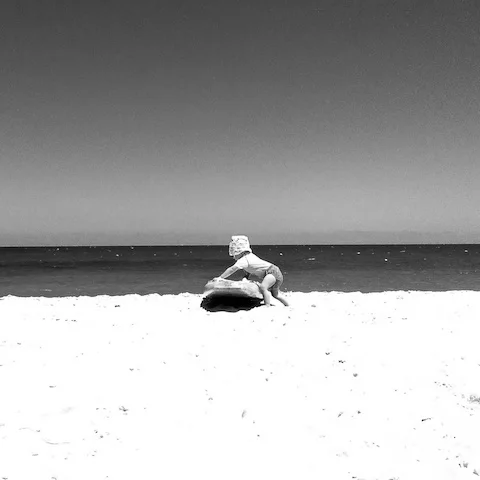
'Some journeys are direct, and some are circuitous; some are heroic, and some are fearful and muddled. But every journey, honestly undertaken, stands a chance of taking us toward the place where our deep gladness meets the world's deep need.'
- Parker Palmer
Translated into Widget Thinking:
Do what makes me glad - Weekend Widget.
Find someone who needs my Weekend Widget enough to pay for it.
Mind the gap. Jump.
Weekend Widget becomes Weekday Widget.
Bliss.
Most of us go about it the other way around.
We want independence, food, shelter, status. We find a boss who pays us - it doesn't really matter what to do and enjoying it is a bonus after all it is called 'work' - to fund these needs. Which leads us to dependence.
We pine for our Weekend Widget - our deep gladness. While the world is denied the benefit of our honestly undertaken journey.
Stop blaming the boss.
Stop blaming the bank.
Begin the journey.
The world needs you.
Alibis.

'Explaining your situation is not going to be nearly as useful as trying to change it through action.'
- Merlin Mann
'I have nothing to say to you,' he said over the telephone.
He was a policeman so he knew his rights.
I had powers of investigation, but not over him.
I was on a deadline and he was a critical witness.
I thought about driving the three hours to try to speak with him in person only so I could say to my boss: 'I even drove for three hours to try to speak with him in person.' I would hang my head and he would put a reassuring hand on my shoulder.
The witness's refusal left me with so many questions and I was running out of time. No less than the Chief of Air Force was waiting on my report. I had so much work to do. I had to write so many more words to hide the fact from the Air Vice Marshal that I had nothing to say. 'What a long report,' he would say. 'You obviously worked so hard.' I needed to do some hard work.
So I went out and bought a newspaper and a coffee and a croissant and did the crossword at a café overlooking the Yarra River. I finished the crossword and sat and watched people for about an hour. Okay it was two.
I was following a rowing crew stroke its way past when it came to me.
I returned to my desk and rang him back.
'I just wanted to let you know that all the other people I've spoken with have laid the blame with you. The evidence as it stands will lead me to make an adverse finding about you so I wanted to give you the opportunity to put your side of the story.'
He spoke for the next two hours.
Step 1: Step Back.
Step 5: Hearing.
Distractions.

Good decision making in three words:
Be attentively curious.
Curiosity is about asking questions.
Attention - according to neuroscientists - is about suppressing distractions rather than enhancing what you're paying attention to.
It's all about the Widget.
Remember the Five Steps.
Step 1: Step Back. Indulge in the distractions. Don't suppress them. Romp in all the feelings and irrational thoughts that won't get the Widget built but that are distracting you from doing so. Be selfish. Purge. Be human. Be yourself.
Step 2: Identify the Issue. Return to the Widget. Start earning your pay. Start asking questions.
Step 3: Assess the Information. Data. Policies. Logic. Cool. Questions.
Step 4: Identify Bias. Am I being distracted by something irrelevant to the Widget? Questions.
Step 5: Give a Hearing. Hey! Affected person! Proof read this! Have I missed anything? Questions.
Questions suppress distractions by forcing us to listen to answers - and by zooming in on the parts of the answers that are Widget relevant.
Make the Decision. Become who you are.
Remove the distractions from everyone who's relying on the decision so that they can do their jobs.
It's called Leadership.
Polite.

'If one of us doesn't say something now we might lose ten years being polite about it.'
- Renée Zellweger - Jerry Maguire
There are many euphemisms for terminating someone's employment.
'Making you available to the labour force' is one.
'Allowing you to find your happiness elsewhere' is my favourite.
There is a school of thought that says a boss's decision to terminate someone's employment should be hers alone. Right, wrong, fair, unfair, stupid, wise. Irrelevant. The boss wants the ditch dug. If she doesn't want to pay me to do it any more because I'm wearing a blue tee shirt - then fine. It's her ditch and her cash.
If I'm as good a ditch digger as I think that I am, why protest? Best I shoulder-arms my shovel and someone will have offered me a job even before it's come to rest on my shrugging shoulder.
If I'm not a good ditch digger, best to find out now because I've got a mortgage. And a life of marrow-sucking days ahead.
Either way - good ditch-digger or woeful - my decisions in response to those made by others are probably teaching each of us both more than if we'd been polite. The boss gets better ditches or regrets being blue-ist. I get a better boss or my bobcat ticket.
The reality is that the industrial laws don't make sacking someone that easy. The legislators and the judges have designed a series of forcing functions into the employment decision-making processes. They compel bosses to follow steps that deter blue tee shirt discriminators making rash sacking decisions that may be damaging to their business and the worker's well-being. Wait. Step Back.
The result is that it's easy to hire and hard to fire.
Perhaps it should be the other way around.
Recruit hard. Mange easy.