
The Purpose of an Argument.
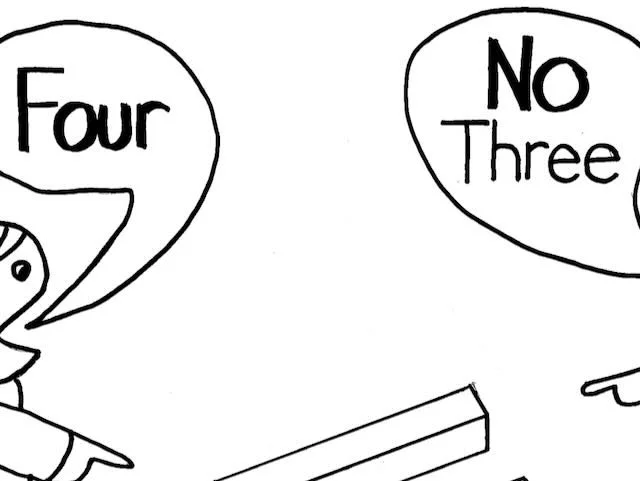
The word ‘argue’ comes from the Latin verb arguere, meaning to make bright, or enlighten.
The purpose of an argument should be for all sides to have the benefit of the same information.
Once this is satisfied, and agreement cannot be reached - the purpose of arguing has been reached and a decision must be made by whoever needs to make it.
Which in turn makes new information available.



Thrilling.

One of the most thrilling experiences is watching as a smart person changes their mind.
Five, Two, or Twenty.

Whether it’s Five Steps to a Good Decision or Two Steps or Twenty…
Breaking down our decision making into discrete parts does the following:
Brings the unconscious into our consciousness
Slows us down
Demonstrates we care about the decision
Steps us out of ourselves into more of an observer
Allows Life to go on - often dampening the initial anxiety and sometimes fixing the issue
Makes our thinking and work visible to others to emulate or improve
An Inadequate Ideal.

“‘One is apt to think of moral failure as due to weakness of character; more often it is due to an inadequate ideal.’ ”
The Widget should be an ideal - bonus if it’s a virtuous one.
Regular moral failure should cause us to review our Widget.
A Bit of Step 4

“Trying to make such a distinction, the first thing that’s required, as Socrates told us long ago, is a bit of self-knowledge. And the variety of self-knowledge that’s especially valuable here is knowledge of your own personal investments. ”
Step 1 of the Five Steps to a Good Decision is:
Step Back.
There’s a little bit of Step 4 (Check for Bias) happening in Step 1, too.
In Step 1 we wallow in our own selfishness and take everything personally.
If we do a good job, we ultimately purge most, if not all, of our bias.
Such that when we come to Step 4, our only bias is towards anyone we serve.
Bias.

The Fourth Step of the Five Steps to a Good Decision is:
Check for Bias.
Being biased isn’t necessarily a bad thing.
A Principal should be biased towards their school community.
An employer should be based towards the safety of her employees.
Checking for bias includes confirming you’re serving those who depend on you.
Make the Work Visible.

Good decisions often look like nothing is happening.
Which is why a leader must make their work of leading visible to their followers.
Modelling the Five Steps is one way.

Like Back Seat Passengers.

Behind every choice...there is a choice architecture, an unconscious set of structures that helps frame the decision. - David Brooks
Whether it’s five steps, or twenty, or one, or none…
We’re all applying our own decision making system.
Albeit like passengers in the back driven by our subconscious.
Seeing What is in Front of Our Noses.

In that letter from Birmingham City jail,” King … simply asked people to see what was in front of their noses. He begins by stating what he is doing in his campaign and how he is doing it. Step one, he instructs the clergymen, is “Collection of the facts to determine whether injustices are alive.” The other three steps, he continued, were (2) negotiation (3) self-purification; and (4) direct action. - Thomas E. Ricks
Dr Martin Luther King followed the Five Steps to a Good Decision.
Step 1: Step Back (In Jail).
Step 2: Define the Issue (Identify injustices.)
Step 3: Assess the Information (Collect facts.)
Step 4: Check for Bias (Self Purification)
Step 5: Give a Hearing (Negotiation)
X was Never Part of the Deal.

“Conflict provides us with information.” - Nikola Overall
A complaint is the complainant alerting us to an information gap.
‘I expected you to do X. But you did X minus Y.’
From this, we learn:
what the complainant expected.
what the complainant got
From this we can respond by:
giving the complainant what they expected or compensating for it
explaining to the complainant that X was never part of the deal.
Then we can set about:
making sure we give people what we promise
making sure we manage people’s expectations

That’s a Knife.

“That’s not a knife…”
No point in exhorting ‘excellence’ when no-one in your audience knows what your ‘excellence’ looks like.
For some, your excellence might even be a step backwards.